
Lead Found in Most Protein Powders

People seem to be obsessed with protein these days, and the “wellness” industry is taking notes, and taking advantage. One of the quickest ways people are consuming protein is in protein powders and shakes. What’s becoming troubling is that protein powder companies are huge offenders of creating products without integrity that contain high levels of toxic heavy metals. According to a new Consumer Reports investigation of 23 popular protein powders and ready‑to‑drink shakes, more than two‑thirds contained more lead in a single serving than what Consumer Reports considers safe for an entire day (0.5 micrograms). On average, plant‑based powders contained about nine times the lead found in dairy‑based ones, and about twice as much as beef‑based ones.
It’s hard to believe that there are no regulations for dietary supplements like protein powders! The federal limits for heavy‑metal content in food does not translate to protein powders and supplements. Manufacturers are left to self‑regulate, which they don’t do! The FDA doesn’t review, approve, or test supplements like protein powders before they are sold. There is no oversight. Once again, our government is failing to protect its people. Children and pregnant women are most vulnerable because lead can damage the developing brain and nervous system, which has the potential to cause neurological issues, learning delays, and behavioral problems. But chronic lead exposure has also been linked to immune suppression, reproductive problems, kidney damage, and high blood pressure in adults.
The truth is, most people really do not need protein powders to get enough of what they need. Whenever possible, we should rely on whole‑food protein sources rather than supplements.
Read more about this topic in this Consumer Reports article.
Pesticides Causing Harm to Child Brain Development
 If you know me, you know I am a big proponent for organic food. Pesticides cause so much damage to our environment and to our health. New information is coming out about how pesticides are also causing brain damage in children. Two recent studies show significant association between the exposure to pesticides and brain damage and behavior changes in children. The studies show that there is a connection between exposure to pesticides and an increase in ADHD and Autism, as well as a decrease in overall IQ. Even small amounts of common pesticides can harm normal nerve development. Sadly, this goes for unborn children as well, so pregnant mothers need to be so careful about what they eat so that their child has the best chance at a healthy life.
It can be tiring to continuously blame the lack of government regulations and policies on issues like this, but it’s horrible that the use of pesticides is allowed at such high volumes when the science is clear. Other countries do a much better job at regulating pesticides. They require proof of safety before allowing it on the market, where as the USA is pro corporate profit and allows products to enter the market without testing first. Unfortunately, it’s left up to the non-profits organizations and the public to prove it’s harm. It’s completely backwards! Do yourself and your family (and future family) a favor, and buy organic whole foods as much as possible.
Read more about this topic in this Regeneration International article.
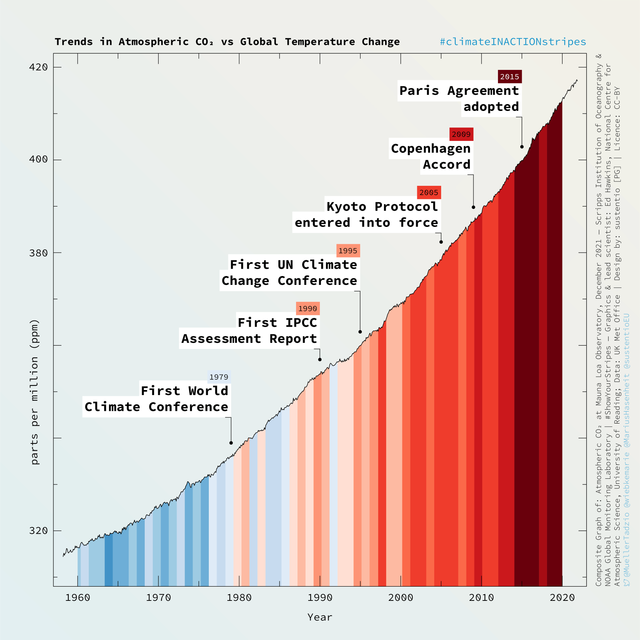 Carbon Dioxide Levels Continue to Rise as Our Government Cancels Support for Renewable Energy and Promotes Fossil Fuels!
About half a century ago, the World Meteorological Organization began measuring the amount of carbon dioxide in the atmosphere. Between 2023 and 2024, the level of carbon dioxide went up more than it ever has since they started measuring.
As you may know, human activity is at the core of the increasing carbon dioxide levels. Despite the many Climate Conferences, Assessments, and Agreements signed by countries around the world, every year things keep getting hotter. Last year was Earth’s hottest year in recorded history.
The average pace of increase was 0.8 parts per million in the 1960’s and more recently we are averaging an increase of 3.5 parts per million.
Read more about this topic in this New York Times article.

Comments are closed.